

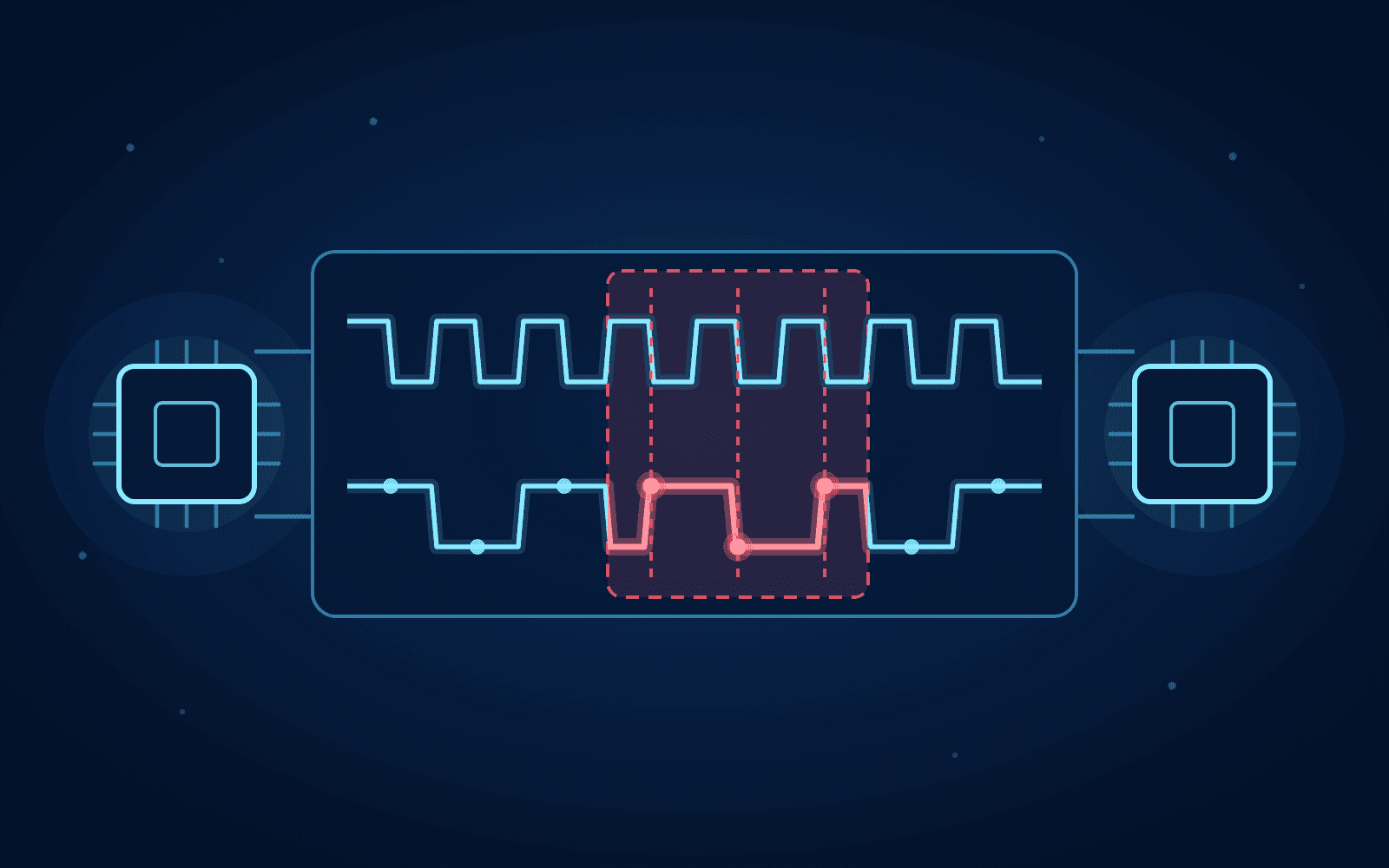
Beyond Functional Pass/Fail: Electrical and Timing Characterization of Digital Interfaces on the Bench
Overview
An interface can pass every functional test — clean enumeration, valid ACKs, correct data — and still be one temperature swing or one board revision away from failing in the field. Functional pass/fail confirms that an interface works. It says nothing about how much margin it has left.
This session looks at what happens between "it works" and "it works reliably". Using real bench cases, we walk through digital interfaces that cleared functional validation but still carried marginal voltage levels, timing violations, or near-zero noise margin — and show how electrical and timing characterization surfaces these problems before a customer does.
What you'll learn
- Why functional pass/fail is necessary but not sufficient — and the failure modes it structurally can't detect
- The electrical parameters that separate a robust interface from a marginal one: logic thresholds, rise/fall times, drive strength, and noise margin
- The timing parameters that expose designs living on the edge: setup/hold, clock period, skew, and jitter
- How to run this characterization on the bench, alongside your existing functional tests
Why attend?
Most interface bugs that reach the field aren't logical — they're marginal. A signal that's technically high, but barely. A setup time that's met at room temperature but not at 85°C. Two "compliant" devices that won't talk because neither has any timing margin left to give.
Who should attend?
- Validation Engineers
- Test Engineers
- Hardware Design Engineers
- Embedded Systems Engineers
- Firmware Engineers
- Product Development Engineers
- Silicon Validation Teams
- Engineers working with digital communication interfaces
Follow the link, register and watch the webinar.