For teams whose .NET applications have to run reliably for decades
Soliton's .NET and C# practice is built on a foundation of engineering software experience: 25+ years building software for test, validation, R&D, and instrumentation. We design and build .NET desktop applications, services, APIs, and engineering platforms for teams who need .NET work delivered at the quality bar engineering software demands. New builds, modernization, and the architecture discipline that lets .NET applications evolve across decades of engineering use.
We Help Our Customers With
Business Applications
Desktop Applications
Web Applications
Plug-in Software Development
Enterprise Applications
Server-side Development
C# Migration
IoT Applications
Cross-platform Applications
Library Development
Visual Studio Extensions
What we build in .NET and C#
Semiconductor Validation GUIs and Device Programming Tools
Desktop applications and frameworks that semiconductor engineering teams use to evaluate, configure, validate, debug, and program devices across the validation-to-production workflow, including clock-based components, RF devices, and other semiconductor parts. These tools support use cases ranging from engineering evaluation and fault detection to verification/validation workbenches and production/operator-facing workflows.
We've helped semiconductor customers modernize legacy evaluation GUI frameworks, automate GUI interactions from external applications, build hardware abstraction layers for DUT communication, and add cross-platform capabilities. This accelerates device release and delivers a better evaluation and validation experience for engineering teams.
Lab Management and Instrument Utilization Tools
Web and desktop applications that help validation and lab operations teams track, monitor, analyze, and optimize instrument utilization across distributed semiconductor engineering labs. These tools are built for real-world enterprise environments with thousands of instruments, multiple sites, mixed connectivity, large volumes of lab data, and teams that need actionable insights without unnecessary hardware investment.
Soliton built Peek-i-Mon, our instrument utilization monitoring tool that reports utilization and idle time across GPIB, USB, and Ethernet instruments without per-station monitoring hardware. Engineering and lab operations teams use it to manage lab assets, analyze utilization trends, optimize instrument deployment and redeployment, and make data-driven procurement decisions.
Hardware and Robotics Control Applications
.NET applications that control instruments, robotic systems, and engineering hardware across validation, simulation, and production environments. These applications are designed for the precision, latency, and reliability that hardware control demands, with UI layers that make hardware states, control flows, and system behavior visible to engineering and operator teams.
We've helped customers upgrade robotic arm control applications, delivering improvements across performance, usability, simulation support, production readiness, and integration with broader engineering systems. This enables teams to validate workflows in simulation and execute reliable real-hardware control when needed in production.
Cross-Platform Engineering Applications and .NET Modernization
Bringing legacy .NET applications forward to modern frameworks and cross-platform deployment. From WinForms to WPF, from .NET Framework to modern .NET, and from Windows-only to multi-OS environments, we re-architect long-lived engineering software to keep it maintainable for the next decade. Soliton helps customers modernize existing .NET applications, refactor legacy frameworks to modern equivalents, connect older applications to newer systems, and build new software components that integrate with established validation and production workflows. This allows engineering organizations to improve interoperability and extend critical systems without disrupting proven legacy workflows.
We've modernized .NET applications across customer environments, refactoring legacy frameworks to modern equivalents, adding cross-platform capability, and re-architecting for long-term maintainability across the engineering organizations that depend on them.
What we build in .NET and C#
Semiconductor Validation GUIs and Device Programming Tools
Desktop applications and frameworks that semiconductor engineering teams use to evaluate, configure, validate, debug, and program devices across the validation-to-production workflow, including clock-based components, RF devices, and other semiconductor parts. These tools support use cases ranging from engineering evaluation and fault detection to verification/validation workbenches and production/operator-facing workflows.
We've helped semiconductor customers modernize legacy evaluation GUI frameworks, automate GUI interactions from external applications, build hardware abstraction layers for DUT communication, and add cross-platform capabilities. This accelerates device release and delivers a better evaluation and validation experience for engineering teams.
Lab Management and Instrument Utilization Tools
Web and desktop applications that help validation and lab operations teams track, monitor, analyze, and optimize instrument utilization across distributed semiconductor engineering labs. These tools are built for real-world enterprise environments with thousands of instruments, multiple sites, mixed connectivity, large volumes of lab data, and teams that need actionable insights without unnecessary hardware investment.
Soliton built Peek-i-Mon, our instrument utilization monitoring tool that reports utilization and idle time across GPIB, USB, and Ethernet instruments without per-station monitoring hardware. Engineering and lab operations teams use it to manage lab assets, analyze utilization trends, optimize instrument deployment and redeployment, and make data-driven procurement decisions.
Hardware and Robotics Control Applications
.NET applications that control instruments, robotic systems, and engineering hardware across validation, simulation, and production environments. These applications are designed for the precision, latency, and reliability that hardware control demands, with UI layers that make hardware states, control flows, and system behavior visible to engineering and operator teams.
We've helped customers upgrade robotic arm control applications, delivering improvements across performance, usability, simulation support, production readiness, and integration with broader engineering systems. This enables teams to validate workflows in simulation and execute reliable real-hardware control when needed in production.
Cross-Platform Engineering Applications and .NET Modernization
Bringing legacy .NET applications forward to modern frameworks and cross-platform deployment. From WinForms to WPF, from .NET Framework to modern .NET, and from Windows-only to multi-OS environments, we re-architect long-lived engineering software to keep it maintainable for the next decade. Soliton helps customers modernize existing .NET applications, refactor legacy frameworks to modern equivalents, connect older applications to newer systems, and build new software components that integrate with established validation and production workflows. This allows engineering organizations to improve interoperability and extend critical systems without disrupting proven legacy workflows.
We've modernized .NET applications across customer environments, refactoring legacy frameworks to modern equivalents, adding cross-platform capability, and re-architecting for long-term maintainability across the engineering organizations that depend on them.
Technology
When .NET Is the Right Choice for Engineering Software
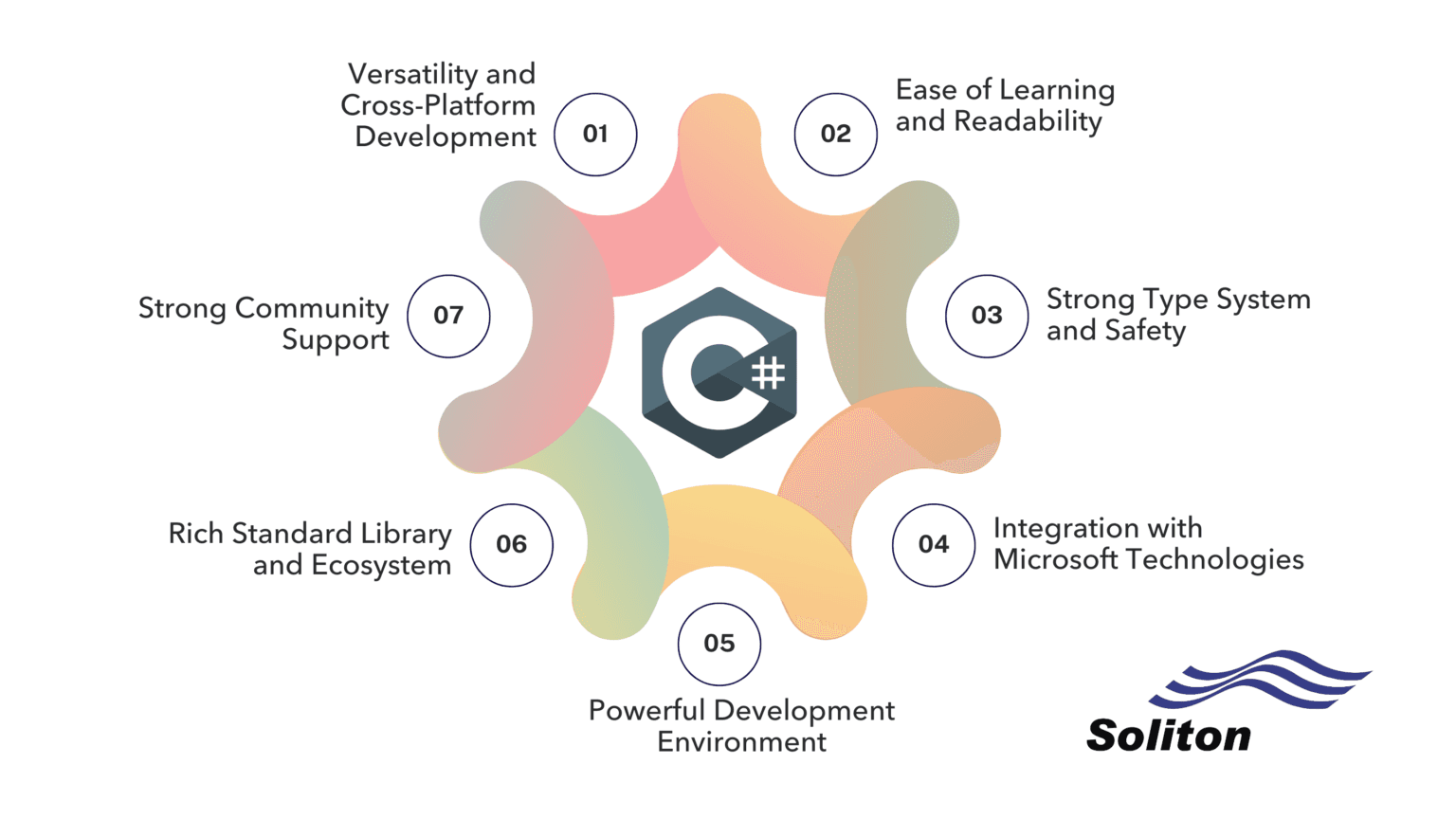
Soliton's .NET work falls into four scenarios where the platform's strengths matter most. Long-lived desktop applications that need to run reliably for years, often across decades inside engineering labs. Tight integration with Windows-based instruments and the lab infrastructure most engineering teams already operate on. Applications where strong typing, performance, and architectural discipline aren't optional. And cross-platform engineering software using .NET 6+ and MAUI for teams running across Windows, Linux, and macOS.